
These lead guitar pentatonic guitar soloing videos show guitar lesson instruction on a 5-note scale. Mostly utilized in rock, blues, and pop solos. It emphasizes the memorization of 5 movable box shapes, mainly the minor pentatonic. Which facilitates immediate, harmonious improvisation throughout the entire fretboard. These video lessons frequently address root notes, techniques such as bending, and the blending of major and minor sounds.
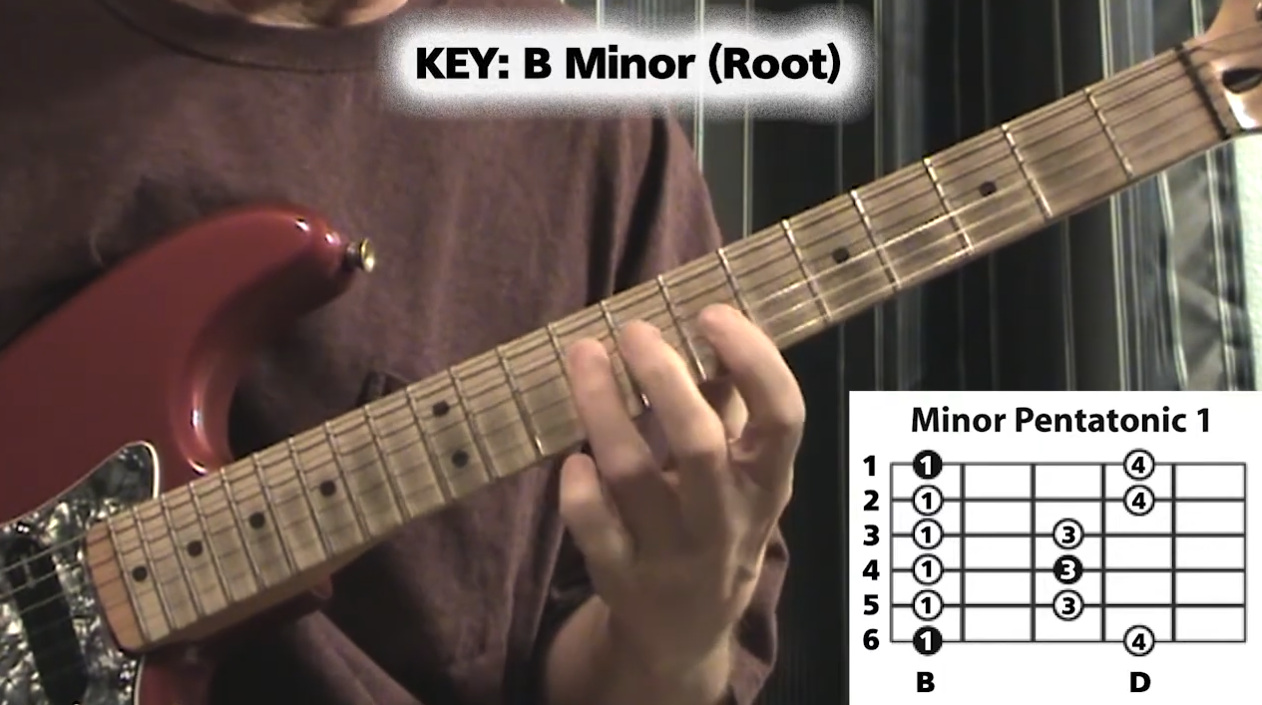
Pentatonic guitar soloing features. Once the Open Chords and Power Chords theory and songs are mastered, students are considered “Intermediate” players and move on to Pentatonic Scales and Blues/Rock progressions. Notes of the neck are covered here and note intervals are introduced. Improvising solo sections.
Key elements of pentatonic guitar soloing encompasses:
- The 5 Shapes (Positions): You will acquire knowledge of five distinct, interconnected, and movable patterns that span the entire fretboard, as outlined in these videos.
- Minor vs. Major: The lessons differentiate between the somber, bluesy minor pentatonic (favored in rock) and the more cheerful major pentatonic, which is often taught using the B minor scale positioned on the 7th fret.
- Root Notes: An essential component of the lesson involves identifying the “root note” (or “home” note) within each pattern, ensuring you understand where to conclude your musical phrases.
- Application: You will learn to implement these patterns to generate riffs and solos, with numerous tutorials employing backing tracks for practicing improvisation.
Blues Progressions and Pentatonic Scales – Here we learn a 12-Bar blues riff sequence as well and introduce the basics of the Major and Minor Pentatonic scales. Students learn to jam these scales over various chord progressions in specified keys.
Pentatonic Interval Training – Example of combining scale runs with a tempo meter to increase finger dexterity and picking speed. All five pentatonic scales are worked over multiple chord progressions in key.
Pentatonic Soloing Position 3 – Students learn combine Ionian and Dorian pentatonic shapes note for note. Here a theory correlation is built using the five pentatonic box shapes and their positions on the neck.
Pentatonic Positions 4 and 5 box shapes – Students learn combine Phrygian and Mixolydian pentatonic shapes note for note. Connection these pentatonic box shapes and their positions on the neck showing the repetitive patterns.