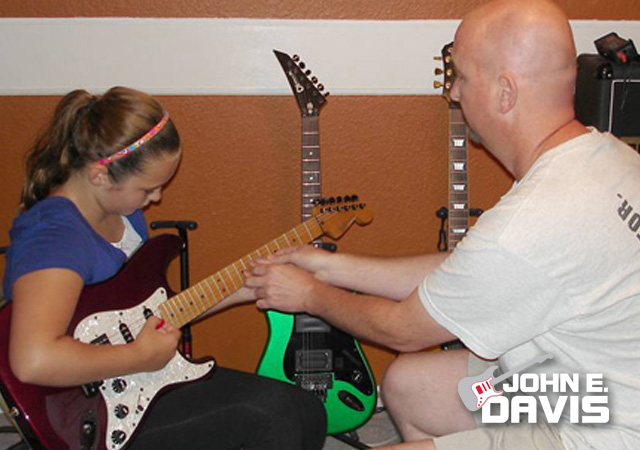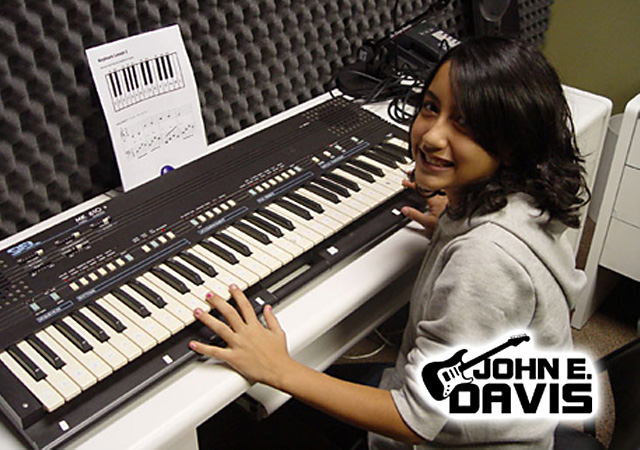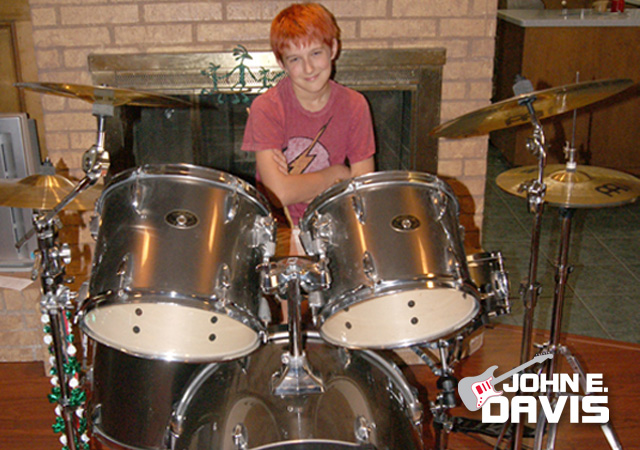
For more than 25 years, John E. Davis was a Guitar Teacher and Music Instructor offering Beginner Lessons in Guitar, Guitar Repair and Live Music Performance. Beginner guitar students learn a variety of much needed skills to learn how to play guitar. View a beginner guitar lesson video.

Beginner guitar students concentrate on developing essential techniques, which encompass proper guitar handling, tuning, and the acquisition of basic open chords (C, D, G, E, A, Em, Am). Important skills involve cultivating rhythm, achieving smooth chord transitions, mastering basic strumming patterns, and utilizing the pick correctly.
Below is an overview of what beginner guitar students generally learn:
Beginner Guitar Students Lesson Fundamental Techniques
- Guitar Anatomy & Maintenance: Understanding the components of the guitar (frets, neck, bridge, pickups) and how to tune it using tuning pegs.
- Posture and Hand Positioning: Adopting proper ergonomics to prevent injury, which includes maintaining a straight wrist and positioning the thumb behind the neck.
- Holding a Pick: Acquiring the correct grip on a plectrum for effective playing.
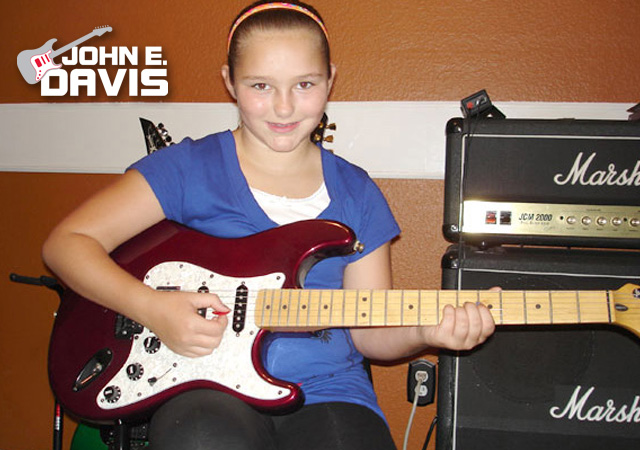
Essential Chords and Rhythm Techniques
- Open Chords: Mastering major and minor chords (A, C, D, E, G, Am, Em, Dm).
- Chord Transitions: Practicing moving between chords smoothly without long pauses, starting with similar finger shapes.
- Strumming Patterns: Learning basic downstroke and upstroke patterns, often starting with consistent, rhythmic downstrokes.
- Basic Rhythm: Developing a sense of timing, often using a metronome.
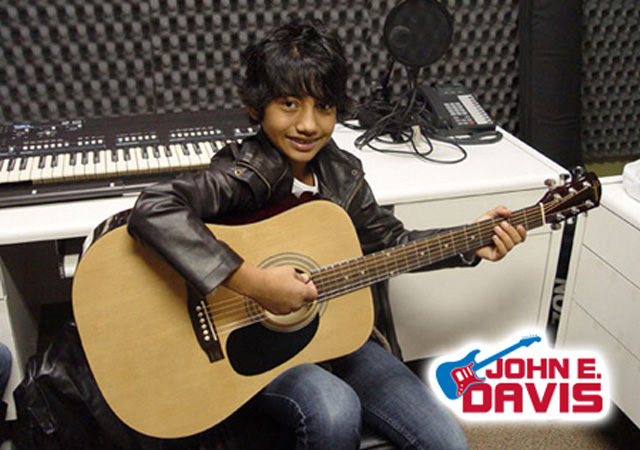
Basic Music Theory and Reading
- Reading Tablature (Tabs): Understanding how to read guitar-specific notation to play songs.
- Notes on the Neck: Identifying the names of notes on the fretboard.
- Simple Scales: Learning the major scale or the minor pentatonic scale.